Understanding Wedding Cake Portions by Tier Size
How Many Servings Does a 6-Inch Cake Provide?
A 6 inch cake often gets less attention than its larger counterparts. Yet this tier holds a clear purpose in the wedding cake 6 8 10 setup. Standard wedding servings cut into small rectangles produce roughly 10 portions from a single 6 inch round. That number shifts with the cutting style! A dessert cut, being more generous, might yield only 6. The top tier is often boxed and saved for the first anniversary.
Bakers measure the radius and height to determine the yield. A 6 inch tier with a deeper profile gives consistent slices when cut from the centre.
- A typical 6 inch round cake serves 10 to 12 guests at a standard ratio.
- It provides 6 to 8 larger dessert portions.
The wedding cake 6 8 10 arrangement gives the smallest tier a specific job. It sits at the top of the cake, and its servings are counted last.
The 8-Inch Tier: A Middle-Ground Option
Most couples fixate on the base tier, yet the 8 inch layer does more work than guests expect in the wedding cake 6 8 10 arrangement. It bridges the intimate top tier and the grand base below. A standard 8 inch round yields 20 wedding portions with rectangular cuts. Dessert cuts reduce that number to about 14.
This tier balances visibility and practicality. It holds enough cake for a meaningful share of guests while remaining elegant in proportion. In my experience, the eye lands on this middle layer first!
Practical advantages:
- It supports the top tier without extra dowelling.
- It offers a wider canvas for piping or fresh flowers.
- It provides enough servings for a small guest list alone.
The 8 inch tier also keeps portion control straightforward. Guests see a defined slice rather than a sprawling cut from a larger base. Caterers appreciate this clarity.
What to Expect from a 10-Inch Cake
When planners discuss the wedding cake 6 8 10 configuration, the 10 inch tier often steals the spotlight as the anchor. A standard 10 inch round yields approximately 30 wedding portions using rectangular cuts. Dessert cuts, which are narrower, stretch that yield to roughly 38 servings. This is the tier that feeds the bulk of your reception.
The base tier also carries structural responsibility. It supports the combined weight of the 8 inch and 6 inch layers above, which means proper dowelling and a sturdy cake board are non negotiable. Caterers appreciate this predictability, as it simplifies portioning during service.
- Delivers the largest serving count in the entire structure
- Provides a wide surface for decorative elements
- Acts as the visual and physical foundation
Guests gravitate toward this tier when they approach the table, expecting a generous slice. In the wedding cake 6 8 10 layout, the 10 inch tier ensures nobody leaves hungry, which is its primary calling.
Combining 6, 8, and 10 Tiers for a Classic Three-Tier Look
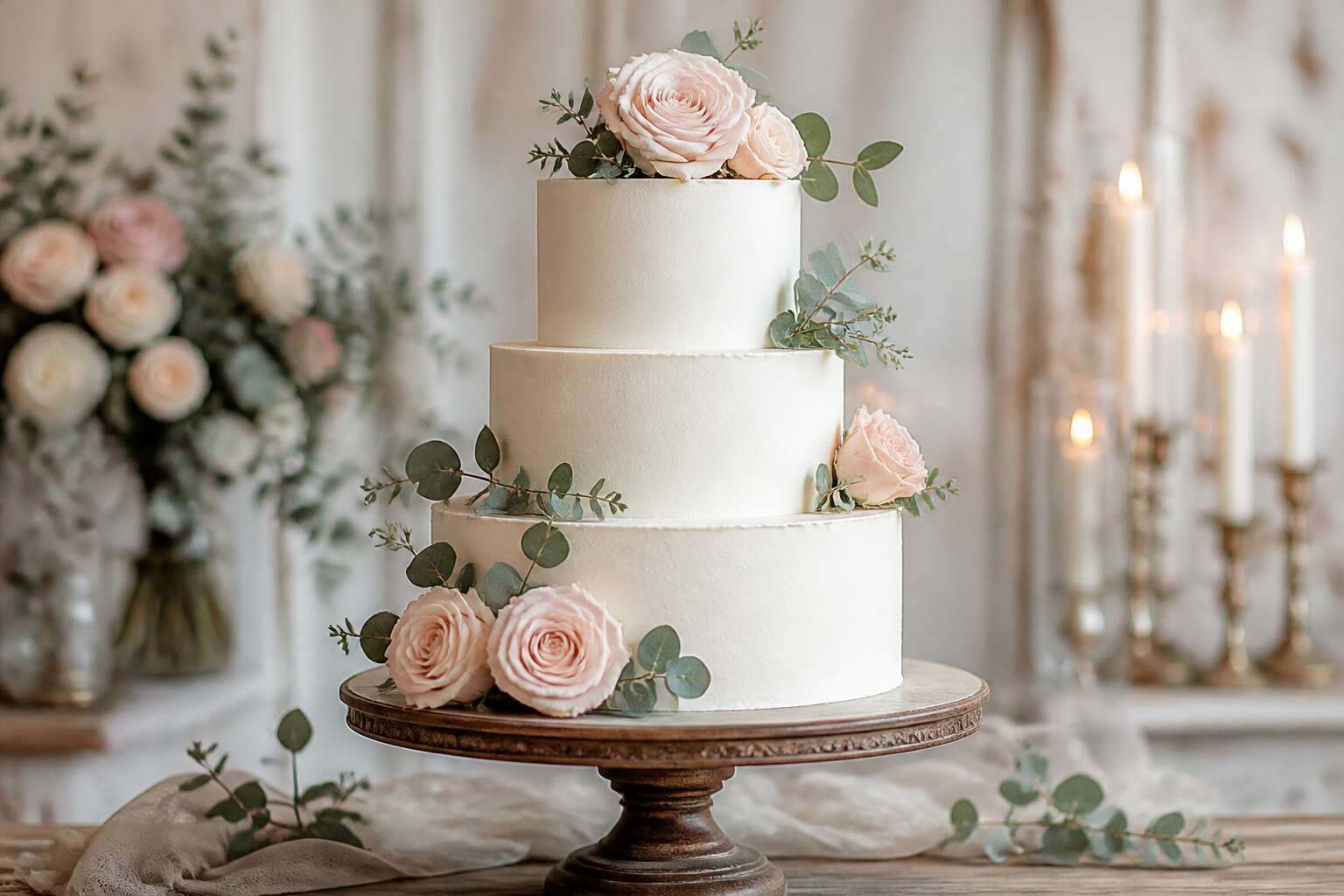
Most couples underestimate how far a tiered structure can stretch. The wedding cake 6 8 10 configuration quietly serves between sixty and seventy four guests, depending on cut style. That makes it a versatile choice for intimate celebrations or larger receptions with room to spare.
- Six inch tier: 10 to 12 portions
- Eight inch tier: 20 to 24 portions
- Ten inch tier: 30 to 38 portions
What makes this combination so elegant is its balance. Each tier contributes a distinct slice of the feast, yet the whole remains greater than the sum. The narrow bases of the upper tiers leave the bottom layer exposed, creating that sought after classic look. Portioning becomes a simple matter of cutting from the outer edge inward. The numbers align with standard catering expectations, so your cake designer and venue staff can coordinate without guesswork.
Choosing the Right Cake Size for Your Guest Count
Matching Tier Sizes to Your Wedding Guest List
Your guest list is the single most reliable compass for navigating cake decisions. A wedding cake 6 8 10 combination serves roughly 80 to 100 portions, but that number shifts with your crowd. Older relatives often leave half their slice, while a younger group might ask for seconds. This is why matching tier sizes to your wedding guest list requires honesty about who is actually eating, not just who is invited.
- For 40 guests, a 6 and 8 inch tier covers the meal service with a little leftover.
- For 70 guests, add the 10 inch tier and expect near zero waste.
- For 100 guests, you need every portion from all three tiers plus a sheet cake backup.
Cake cutting culture in South Africa leans toward generous slices, so round down your expected portions. If the reception runs long, guests gravitate to the cake table late. A wedding cake 6 8 10 gives you flexibility to serve larger cuts without panic. Treat the tier count as a planning tool, not a display promise.
Using a Wedding Cake Calculator for Accuracy
Most couples treat cake portion counts as a vibe, not a variable. The wedding cake 6 8 10 arrangement looks elegant, but its accuracy depends entirely on how you feed the numbers into a wedding cake calculator. Overestimating the crowd leaves a freezer full of sponge for months. Run the figures properly and the calculator tells you exactly where each slice goes.
To get a reliable output, you must enter more than the guest count. Include:
- The slice size your caterer will cut.
- Guests who skip dessert.
- The proportion who will want seconds.
Once those variables are set, the calculator handles the arithmetic. It will confirm that your wedding cake 6 8 10 serves around 80 to 100 portions, or it will expose the need for a backup tier. In South Africa, where generous slices are practically a cultural requirement, that clarity is worth far more than a pretty sketch.
When to Add a Smaller Top Tier for Display
Choosing the right cake size for your guest count starts with honest numbers. The wedding cake 6 8 10 arrangement suits celebrations where the guest list hovers between 80 and 100. But if your venue holds only 60 guests, that same configuration leaves you with surplus tiers and a caterer who keeps inventing reasons to cut extra slices. I have watched couples nod along to portion charts, then panic when the first slice comes out generous.
When your guest count lands below 70, you still have options. Some couples keep the wedding cake 6 8 10 for its dramatic silhouette, then instruct the caterer to serve only the bottom two tiers. The top tier becomes a display piece, untouched until the couple carries it home.
That smaller top tier serves a purpose beyond aesthetics. It preserves the classic three-tier profile without forcing you to feed people who would rather dance than eat.
How to Avoid Running Out of Cake
A wedding cake 6 8 10 looks magnificent on the stand and suspiciously small on the plate. Couples count servings by the chart, yet caterers cut by instinct. The first slice is always generous, and the last tier disappears because everyone skipped dinner to save room for dessert.
The fix is not a bigger cake. It is a firmer instruction. Tell the caterer to serve the bottom two tiers first, then watch:
- Three people request half a slice and receive a slab.
- The toddler at table five has already eaten for three.
- Uncle Johan makes two trips because the first slice was too small.
The wedding cake 6 8 10 serves eighty guests according to the portion chart. The actual count depends on the wrist holding the knife. Account for the generous hand and the aunt who takes a portion for later, and you will not run out. You will freeze less.
Pricing and Cost Considerations for 6, 8, and 10-Inch Cakes
Average Price per Tier Size at Bakeries
The first quote for a wedding cake 6 8 10 often arrives with a small shock. A single 6 inch tier might cost R800 to R1,200 at a Johannesburg bakery, while an 8 inch tier climbs to R1,400 and a 10 inch tier can reach R2,200. Those prices reflect ingredients, labour, and the fine detailing brides request.
- 6 inch tier: R800 to R1,200
- 8 inch tier: R1,400 to R1,800
- 10 inch tier: R2,000 to R2,800
Yet the total for a full three tier wedding cake 6 8 10 rarely equals the sum of individual tiers. Bakers often discount the assembled stack by 10% to 15% because production becomes efficient. I have seen couples pay R4,500 for a buttercream cake, while a fondant covered version with sugar flowers exceeds R8,000. Location also shifts the average price per tier size at bakeries, with Cape Town vendors charging more for delivery and setup.
Why Larger Tiers Cost More Per Serving
Most couples assume the price per serving drops on a larger tier. For a wedding cake 6 8 10, the opposite is true once the structure is involved. The 10 inch base must carry the entire stack, so the baker bakes a denser crumb, adds internal dowels, and layers extra ganache for stability. None of that work is visible, yet it costs more than the 6 inch tier, which bakes quickly and carries nothing.
Fondant also covers a wider circumference, requiring more material and more careful smoothing. Every serving from the base tier therefore carries a hidden architectural cost, one that has nothing to do with servings and everything to do with gravity.
Saving Money with a Dummy Tier or Sheet Cake
The cost of a wedding cake 6 8 10 often unsettles couples who expect price to match visible servings. Each tier carries its own structural burden, and that burden shows up in the quote. Here is the part I find most couples miss: you can have the grand look without paying for dessert you will never eat.
A dummy tier, made from foam, replaces the middle layer of the stack. The savings accumulate quickly:
- less baking time and fewer ingredients
- no additional internal support
- reduced delivery weight and handling
The visual impact stays intact!
For those who still need genuine servings, a sheet cake waiting in the kitchen provides the required quantity. The display cake remains impressive while the cost per slice drops significantly. This way, a wedding cake 6 8 10 becomes a centrepiece, not a line item that drains your budget.
Bakery Pricing Models Explained
Bakery pricing models for a wedding cake 6 8 10 rarely follow a single formula. Some charge per serving, others per tier, and a few factor in decoration time separately. The 6 inch tier might cost less per slice than the 10 inch tier because of structural work. That inversion confuses many couples.
Consider how bakeries calculate overhead. Oven space, skilled labour, and fondant all shift the quote. A three tier cake demands more assembly time, so the price rises even if the servings stay modest.
- Per slice pricing favours larger tiers
- Per tier pricing rewards simpler designs
- Complexity fees apply to hand painted details
Understanding these models helps you compare quotes fairly. A wedding cake 6 8 10 quote from one bakery may include delivery, while another adds it later. Always ask what the base price covers.
Hidden Fees to Ask About Before Ordering
A quote for a wedding cake 6 8 10 often looks complete until the invoice arrives. That moment of surprise, when the final total climbs higher than the paper promised, is all too common. I have seen couples budget for buttercream and fresh flowers, only to discover that the cake stand rental and the delivery driver are separate line items.
Before you sign any contract, ask about these potential additions:
- Delivery and setup, especially if the venue is outside a certain radius
- Charges for chilling the cake on site or providing a refrigerator
- Fees for cutting and plating the servings at the reception
- A rental fee for the cake stand or topper if you are not supplying your own
Each bakery structures its pricing differently for a wedding cake 6 8 10. One might fold the stand hire into the base cost, while another adds it as an afterthought. The tier sizes themselves rarely change, but the ancillary costs vary wildly. Always request a written breakdown that names every possible fee. That paper trail protects your budget and your peace of mind.
Baking and Design Tips for Multi-Tier Cakes
Structural Support for Stacked 6-8-10 Tiers
The engineering behind a wedding cake 6 8 10 starts with dowels. These wooden rods carry the weight of the upper tiers. Without them, the 10 inch base would sink. Bakers often trim each dowel flush with the tier surface. This ensures the cake board above sits level. For the 8 inch middle tier, a four dowel square pattern works best.
The 6 inch top tier needs a board to distribute its load evenly. Interestingly, in my experience, condensation from refrigeration causes more collapses than improper stacking. This is why professionals assemble tiers on site. A central rod, added after final placement, locks everything together for transport.
Formatting a wedding cake 6 8 10 with these methods ensures a stable structure. The result stays upright from kitchen to reception hall!
Flavor Pairing Across Different Tier Sizes
The beauty of a wedding cake 6 8 10 lies in the freedom to serve three different flavours. Many couples choose one taste for every tier. That is a missed opportunity! Flavour pairing across a three-tier structure follows a pattern: the base satisfies conservative palates, the middle introduces a regional twist, and the top rewards guests who seek adventure. For South African weddings, this might mean a vanilla custard base, a rooibos-infused middle, and an Amarula chocolate crown.
Baking a wedding cake 6 8 10 separately for each size requires these adjustments:
- The 10 inch base bakes longer at a lower temperature to prevent a dark exterior
- The 8 inch tier needs a filling thick enough to bear the weight above it
- The 6 inch top tier demands a denser sponge, as small rounds dry out quickly
Each tier keeps its own chilling rhythm before assembly, protecting the structure.
Fondant vs. Buttercream for Multi-Tier Cakes
Fondant gives a wedding cake 6 8 10 that flawless, sculpted finish! Buttercream offers a softer, homemade appeal. The decision changes how you bake each tier.
Fondant hides imperfections well, but it demands a sturdy crumb coat underneath. Buttercream forgives more, though it needs firm refrigeration during Durban’s summer heat. Consider your venue before choosing.
When designing a multi-tier cake, keep these principles in mind:
- The top tier should appear taller than it is wide. Proportion matters more than ornament.
- Fresh flowers require protective wrapping where they touch the icing.
- Textured finishes disguise fingerprints better than smooth surfaces.
I prefer a hybrid approach. A buttercream layer beneath fondant delivers the best result. The sponge stays moist, and the design remains crisp throughout the reception.
Transporting and Setting Up Your Cake Safely
The most damage to a multi-tier cake occurs during transport, not in the oven. Each tier of a wedding cake 6 8 10 has a specific structural role. The 10 inch base endures the most stress, so bake it a day early to allow the sponge to settle. A stable crumb coat prevents shifting during travel.
Before you load the cake, map the route. Sharp corners and potholes create the worst jostling. Place the cake box on a flat, nonslip base, and never stack other items alongside it.
- Each tier rests on its own board.
- Thirty minutes of refrigeration before departure firms the icing.
- A repair kit with extra icing and spatula travels in the boot.
Setting up requires patience. Level the table with wedges, then assemble the tiers on site. A wedding cake 6 8 10 can tolerate minor adjustments, but only with a steady hand.
Alternatives and Creative Options for Wedding Cake Tiers
Using a 6-Inch Top Layer for Cake Cutting Ceremony
Many couples discover that the wedding cake 6 8 10 structure creates a striking visual, yet the top tier often remains untouched. For the cake cutting ceremony, that 6 inch layer can serve a purely symbolic role. Some bakers offer a separate, humble cake for slicing, allowing the ornate top tier to be preserved or displayed. Others prefer to freeze the 6 inch layer for a first anniversary, though this requires careful wrapping. A creative alternative involves a dummy top tier with a hidden real cake, or using the 6 inch tier for the couple only. Consider these options:
- Design a bakery-style cutting cake while the 6 inch tier is a decorative replica.
- Request a half sheet cake for guests and keep the tiered display intact.
- Use the top layer for a private dessert after the reception.
Ultimately, the wedding cake 6 8 10 configuration offers flexibility. The cutting ceremony needs only a slice, so reimagining that top tier keeps costs and logistics manageable.
Repurposing Leftover Tiers for Your First Anniversary
The first anniversary arrives with a peculiar weight. That archived slice from the wedding cake 6 8 10 tower carries expectations beyond its crumb. In my years covering bakery trends, I have watched the frozen reveal become anticlimactic. Most couples simply thaw it, but freezing fundamentally alters texture, turning buttercream into a grainy whisper!
Repurposing the leftover tiers offers an escape from that disappointment. The saved cake can take several new forms:
- Layer it with whipped cream and fruit for a quick parfait.
- Fold it into a bread pudding with a bourbon sauce.
- Blend it into a milkshake or festive milk punch.
- Grind it, once thoroughly dried, into a cake crumb flour for scones.
Each approach honours the original structure without pretending a year of frost left it pristine. The wedding cake 6 8 10 becomes a starting point, not a museum piece.
Non-Traditional Tier Combinations Beyond 6-8-10
The wedding cake 6 8 10 functions as a standard, but preference rarely follows a formula. In my work with couples, I see many hesitate to deviate because tradition feels safe. Yet a smaller gathering might find more meaning in an 8-inch tier paired with a 4-inch crown, or a single 10-inch cake that allows guests to eat with abandon!
Changing the geometry helps. A square tier beside a round one, or two tiers of equal size stacked off-center, creates a distinct silhouette. For those seeking variety, these arrangements answer differently:
- Place a 6-inch top on a 14-inch base for dramatic proportion.
- Use three 6-inch tiers for a column of flavor intensity.
- Skip the tiers completely and serve individual bundt cakes from a stand.
Any deviation from the wedding cake 6 8 10 pattern invites guests to see the dessert as a deliberate choice. That perception lasts longer than any crumb.
Adding Height with Decorative Separators
Vertical space is the most underused asset in tiered cake design. A wedding cake 6 8 10 stacked directly creates a sturdy, classic profile, but replacing those contact points with decorative separators changes the entire silhouette. Tall glass pillars, tapered brass rods, or turned wooden spindles lift an eight inch tier and give the eye somewhere to travel.
Material choices alter the mood as much as the dimensions. Consider the effect you want before choosing:
- Clear acrylic columns for a floating illusion
- Brass or copper pillars for a warm metallic accent
- Ceramic spools with matte pastel glazing
Each material shifts the way light passes between the tiers. In Cape Town, bakers hide internal supports inside these separators, so the height is purely aesthetic. A larger gap invites flowers or small ornaments, while a narrow gap keeps the wedding cake 6 8 10 outline tight and formal. That decision matters more than the flavour list.
Renting Fake Tiers to Achieve a Larger Look
There is a particular honesty in admitting that a wedding cake 6 8 10 feeds only a portion of your guests. The rest of the table craves the spectacle, not the sponge. Renting fake tiers, or dummy tiers, satisfies that craving without the waste. Styrofoam rounds wrapped in the same fondant become indistinguishable from the edible tiers at a distance.
Your baker constructs the display so the bottom tier is often the dummy. The fake base bears the weight of the real tiers above it, while the cutting cake stays safely in the kitchen. Guests see the full tower. Only the staff know where the real cake waits.
- Dummy tiers wrapped to match your chosen finish
- Fake tiers with concealed storage
- Reusable acrylic tiers rented from the bakery
The result is a towering centrepiece that photographs like a fully edible cake. The wedding cake 6 8 10 represents a promise of abundance, and that promise matters more than the logistics.

0 Comments