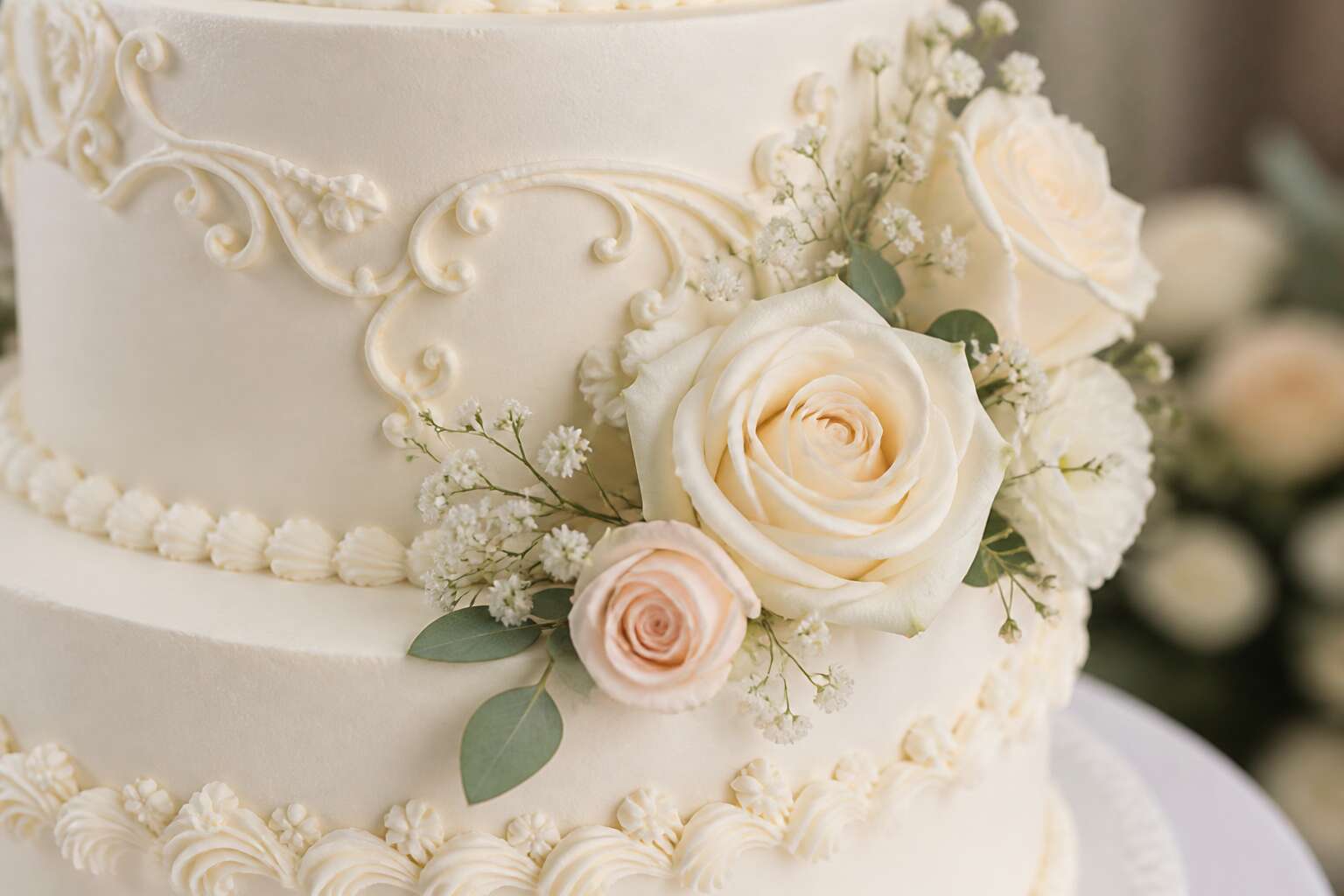
Understanding Wedding Cake Buttercream
What Is Buttercream?
Most couples don’t realise that the creamy layer on their wedding cake is often more important than the sponge itself. I’ve seen many tastings where the focus goes to flavours, yet the buttercream that binds everything together gets ignored. In South Africa, where heat can be unforgiving, choosing the right wedding cake buttercream comes down to understanding its basic ingredients.
Buttercream is essentially a mixture of fat and sugar, sometimes with eggs or liquid added. The fat can come from butter, shortening, or even cream cheese. Each base changes the texture, sweetness, and stability. For example, Swiss meringue buttercream uses whipped egg whites, while American buttercream is simply butter and icing sugar. The latter is easier to make but less resilient in warm weather.
- Italian buttercream: cooked sugar syrup added to whipped eggs
- French buttercream: uses egg yolks for a richer finish
Your wedding cake buttercream choice affects both taste and how well the cake survives the reception. Get this right, and the cake becomes a true centrepiece.
Why Buttercream Is Ideal for Wedding Cakes
Every wedding cake eventually faces its own undoing: the knife, the warmth of the hall, the long hours of display. Wedding cake buttercream is what holds the structure together until that moment arrives. It combines whipped fat and sugar into a stable form, one that holds shape beneath the weight of flowers and scrutiny.
In South Africa, this resilience is essential, and I have watched more than one beautiful cake fail without it. The reception stretches from afternoon into evening, and the cake must remain composed while guests move around it. Wedding cake buttercream must:
- Hold its shape for hours without constant refrigeration.
- Resist the slow pull of humidity and harsh light.
- Bond with the sponge without turning greasy or brittle.
Buttercream vs. Fondant for Weddings
Fondant gives a wedding cake a porcelain finish that photographs beautifully. Wedding cake buttercream gives it something else: a surface that responds to the heat of a Durban afternoon. The trade off is real, and it goes beyond what looks better in the album.
- Fondant cracks under humidity and tastes of sugar paste rather than butter.
- Wedding cake buttercream tolerates temperature swings and keeps the crumb moist.
- Fondant shatters at the cut; buttercream yields cleanly under the knife.
Couples pick fondant for sculptural precision, yet buttercream allows for texture and movement that suit a farm shed or a cliffside lawn. In South Africa, where a cake may sit through an entire evening without refrigeration, the practical case for wedding cake buttercream outweighs the cosmetic appeal of fondant.
Popular Buttercream Styles for Modern Weddings
The most photographed element of a wedding cake is the frosting, not the structure beneath it. Wedding cake buttercream carries that responsibility with a resilience that fondant cannot mimic. Understanding its behaviour under a Durban sun or a Cape winter breeze changes how a couple envisions their dessert.
Modern couples are moving away from white surfaces toward styles that reveal the maker’s touch. The rustic sweep of a palette knife, the tight rope of a piping bag, the curve of a chilled glaze. Each technique alters how light falls on the cake.
- Italian meringue buttercream, silky and stable for warm weather.
- Swiss meringue, lighter on sweetness, heavier on sheen.
- American buttercream, straightforward and forgiving for bold colours.
Choosing among these depends on the venue, the season, and how the cake will travel. Wedding cake buttercream rewards couples who plan for texture rather than sheen.
Choosing the Right Buttercream Recipe
Classic American Buttercream
Every wedding cake rests on a single decision: the buttercream recipe. Classic American buttercream remains the most dependable choice for wedding cake buttercream because it is straightforward and predictable. Butter, icing sugar, and a splash of milk. Nothing more.
Your recipe should match your event’s realities. A summer wedding in the Winelands needs a higher sugar ratio for stability. A winter celebration in Johannesburg can afford a softer, richer texture. Weigh these options:
- Standard American buttercream, clean vanilla flavour with a smooth finish
- Crusting buttercream, which sets firm and tolerates warm weather
- Enriched versions with cream cheese or white chocolate for added complexity
The ideal wedding cake buttercream is the one that slices cleanly, holds its form, and lets the cake itself take centre stage.
Swiss Meringue Buttercream
Swiss meringue buttercream often gets overlooked when couples debate wedding cake buttercream options. That is a pity. It starts with egg whites and sugar gently warmed over a water bath, then whipped into a glossy meringue. Softened butter is beaten in slowly, producing a satiny finish that slices cleanly without the cloying sweetness of some alternatives.
This is a living buttercream. It responds to the weather. Warm rooms make it slump. Cold venues make it stiffen. When selecting wedding cake buttercream for a summer garden reception in Cape Town, remember the day’s heat. Here is the trade-off:
– A silky mouthfeel that feels richer than standard buttercream
– A less sweet profile that lets the cake flavour shine
– A fussier temperament that demands patience
Those who master it will serve their guests something memorable.
Italian Meringue Buttercream
Italian meringue buttercream is the choice for those who value structure over speed. A boiling sugar syrup at 118°C is poured into whipped egg whites, cooking them instantly. This creates a sturdier base than Swiss meringue, which matters for a wedding cake buttercream that must survive a long reception.
The result is a dense, glossy texture that pipes sharp details and tolerates warm rooms better. But the process is unforgiving. You need a candy thermometer and steady hands. Miss the temperature and you get a grainy mess. I have watched bakers sweat over this step!
That tension is the price of reliability. Some couples will prefer the softer, more delicate Swiss approach. Others need the strength of Italian.
French Buttercream
French buttercream follows a different tradition. Instead of egg whites, it blends yolks with hot sugar syrup, whipping them until pale and thick before adding soft butter. Three qualities matter most:
- Custard-like depth that only yolks provide
- A pale gold colour visible against white cake layers
- A supple texture that melts smoothly on the palate
This wedding cake buttercream softens quickly at room temperature, which curbs its use for ornate piping. It performs best as a filling between layers where its richness can register fully. South African couples who prize flavour above intricate decoration often select French buttercream for winter weddings.
Vegan and Allergy-Friendly Alternatives
At a recent Franschhoek wedding, the caterer counted nine dietary restrictions across a guest list of sixty. That reality shapes how couples choose their wedding cake buttercream.
Vegan and allergy friendly alternatives no longer mean sacrificing texture. Aquafaba, the liquid from cooked chickpeas, whips into a meringue that rivals egg whites. Plant based block butter, not the spreadable kind, provides the fat that traditional recipes demand. This approach suits South African weddings where guests may avoid dairy or eggs for health, ethics, or religious reasons.
Common allergens to note when selecting a base:
– Dairy
– Eggs
– Nuts
– Soy
A couple who knows their guests’ needs can select a recipe that works across the table. The result is a wedding cake buttercream that pleases everyone without sending someone to search for an antihistamine.
Flavor and Pairing Ideas for Wedding Cake Buttercream
Classic Vanilla and Almond
Vanilla and almond persist across decades of wedding cake buttercream because taste memory carries weight. Vanilla reads as comfort, a return to birthday cakes. Almond reads as rawer, a bitterness that keeps sweetness honest. That tension suits a wedding.
Source matters. Madagascan vanilla lends creamy, floral richness to classic vanilla wedding cake buttercream, while Tahitian vanilla tilts toward fruit and spice. The same recipe shifts with the bean you choose.
Almond is less forgiving. A few drops of pure extract sharpen the sweetness. Toasted flakes add texture and depth against fresh berries or dark chocolate.
- Pair vanilla wedding cake buttercream with lemon curd or stone fruit.
- Let almond buttercream carry the show beside passionfruit or Cape gooseberries.
- Use a half vanilla, half almond blend to balance both worlds.
Flavour memory shapes how the first slice is remembered. Vanilla and almond honour tradition while leaving room for interpretation.
Citrus and Fruit Infusions
Citrus and fruit infusions change the balance of wedding cake buttercream. Lemon zest cuts through the fat of butter and sugar, leaving a bright, sharp finish. Orange blossom water adds a floral note that pairs well with cardamom or dark chocolate. Grapefruit, when used sparingly, offers a bitter edge that stimulates the palate before coffee is served.
For fruit, the key is reducing pulp to a concentrate. A raspberry puree folded into buttercream lends a pink tint and a tart sweetness. Passionfruit seeds provide a crunch that contrasts with the soft crumb of the cake.
- Pair lemon buttercream with elderflower sponge.
- Use passionfruit buttercream with coconut layers.
- Match orange buttercream with dark chocolate ganache.
These pairings depend on the base style of your wedding cake buttercream. Swiss meringue absorbs citrus oils more readily than American buttercream. Consider that when choosing your infusion.
Chocolate and Caramel Creations
Chocolate and caramel transform wedding cake buttercream into something darker, deeper. I find that a single batch of Swiss meringue buttercream, beaten with melted dark chocolate, develops a fudgy density that holds its shape across a three tier cake. Temperature matters. Warm chocolate wrecks the emulsion; cold chocolate leaves hard shards.
Caramel needs patience. A dry caramel cooked to amber introduces toasted bitterness that suits roasted nut sponges. For a smoother result, fold in salted caramel sauce at room temperature.
Try these pairings:
- Dark chocolate buttercream with hazelnut praline sponge
- Milk chocolate buttercream with banana layers
- Salted caramel buttercream with spiced apple cake
The right wedding cake buttercream for chocolate and caramel depends on the base style. French buttercream carries rich egg yolks that mute the sweetness of caramel. Italian meringue buttercream stays stable in warm weather and preserves the chocolate’s clean flavour.
Floral and Botanical Flavors
Half a teaspoon of orange blossom water has ended more wedding cake friendships than any fondant mishap. Floral botanicals demand precision. Rose water works best once you add it drop by drop. Jasmine introduces a sweetness that is almost perfumed. For a South African wedding, consider buchu or fynbos honey, which offer a subtle herbal character without overpowering the crumb.
- Elderflower buttercream with lemon sponge
- Violet buttercream with white chocolate layers
- Chamomile buttercream with peach filling
Steep botanicals in warm cream before beating them into the buttercream. This releases their essence evenly. The finished wedding cake buttercream tastes authentically floral, never artificial.
Seasonal and Destination-Inspired Pairings
In Cape Town’s summer, a wedding cake buttercream whipped with granadilla pulp and a whisper of grapefruit zest tastes like the first breath of a southeasterly breeze. Winter weddings on the Highveld call for warm dark berry compotes folded into salted caramel buttercream. For a coastal garden reception, coconut cream reduced with lime leaves adds a shimmery tang to the crumb.
Here are pairings that honor South Africa’s regions:
- Rooibos tea infused in wedding cake buttercream alongside roasted pear filling
- Marula fruit curd under a silky white chocolate buttercream
- Honeybush syrup swirled into mascarpone buttercream with fig layers
The same wedding cake buttercream adapts to its destination. A Karoo celebration might crave the smoke of mesquite, while a bushveld luncheon gleams with wild orange blossoms. Let the landscape choose the fruit, the herb, the rind. Your buttercream becomes a map of the day itself.
Coloring and Decorating with Buttercream
Natural Food Coloring Options
A single teaspoon of beetroot powder often changes the entire character of a wedding cake buttercream. Crushed rooibos gives a soft terracotta, while blue butterfly pea powder creates a slate lavender. These natural pigments need time to develop. Leave the bowl for ten minutes, then check the shade again.
For deeper hues, you might combine sources without overwhelming the frosting. A good starting set includes:
- Beetroot powder for rose and raspberry tones
- Turmeric for butter yellow and apricot
- Spirulina for pale sage or seafoam
Remember that each natural agent carries its own fragrance. Gentle heating often deepens the colour, but it also thins the buttercream, so plan your piping schedule carefully. That patience rewards you with a wedding cake buttercream that looks organic and understated, far different from synthetic dyes.
Achieving Smooth Finishes
A well-smoothed wedding cake buttercream takes ten minutes; a poorly smoothed one takes an hour to hide. In the coastal humidity, the frosting behaves like a moody houseguest, collapsing when ignored and tearing when handled with impatience.
I start with a chilled crumb coat and a patient hand. The bench scraper needs a hot water bath, then a thorough drying. One circular pass at a steady rhythm beats many jagged corrections.
For those who want proof, here is my sequence:
- Spin the turntable without pressing the scraper.
- Clean the blade after every revolution.
- Trust the final sweep to heal small surface breaks.
That deliberate closing motion gives the wedding cake buttercream an unblemished facade, worthy of the bridal table’s gaze.
Piping Techniques for Wedding Cakes
Color transforms wedding cake buttercream from plain to personal. I add gel paste with a toothpick, a little at a time. Too much pigment can break the emulsion and leave streaks. Piping techniques depend on the frosting’s stiffness. A stiff batch holds sharp edges for rosettes. A softer batch suits smooth borders. My process follows a fixed order.
- Mix color into a small test batch
- Match the tip to the texture
- Pipe practice lines on parchment
Each wedding cake buttercream then reflects the couple’s taste without losing the firmness needed for stacking. The extra minutes spent on color testing and piping speed pay off in a design that holds its shape through the reception.
Textured Buttercream Trends
More than half of South African couples now request a textured finish on their wedding cake buttercream. The trowel and bench scraper have given way to palette knives and stippling brushes. These tools create shadows and peaks that turn frosting into a tactile landscape. Ridge lines, swooping waves, and rough-hewn strokes are replacing the sterile flatness of old gallery cakes.
Coloring textured buttercream demands a different eye. Shadows absorb light, so the base pigment needs more depth than a smooth surface. I add gel paste in thin layers, checking the tone under direct light. For a rustic look, I might use a dry brush to lift streaks of color.
Useful texture directions:
– Rustic furrows made with a stiff spatula.
– Vertical combed lines that mimic woven fabric.
– Soft, pillowy peaks pressed in with a damp cloth.
The result is a wedding cake buttercream that feels handmade and alive. The texture interacts with the venue lighting, shifting the mood as the day moves from afternoon to evening. That is the power of combining color with dimension.
Adding Metallic Accents and Embellishments
Metallic accents transform wedding cake buttercream into a luminous centerpiece. Gold leaf shimmers when layered over textured ridges, catching each ray of venue light. I often pair luster dust with a soft brush, tapping it along the peaks of stippled frosting. The contrast between matte buttercream and brilliant metal creates a quiet drama that photographs exceptionally well.
Embellishments should echo the cake’s personality. Sugar flowers, pearl drops, and delicate filigree add a second layer of artistry. For a coastal South African wedding, consider pale bronze dust with sculpted seashells.
- Edible gold flakes for high-gloss moments.
- Mother of pearl powder for a subtle sheen.
- Copper leaf for warm, earthy depth.
Your wedding cake buttercream becomes a canvas where texture and light converse, making every table a stage for celebration.
Logistics, Storage, and Preparation Tips
Making Buttercream in Advance
Once the metallic accents are set, attention turns to the clock. Wedding cake buttercream does not tolerate tardiness, but it rewards preparation. Most professionals in Johannesburg and Cape Town agree that a three day window works best for making buttercream in advance. Flavours meld while the texture remains intact.
- Store Swiss meringue buttercream in airtight containers, pressing plastic wrap directly onto the surface to prevent a skin from forming.
- Keep American buttercream at cool room temperature if using within 24 hours; otherwise refrigerate it.
Re whipping is the secret. Cold buttercream seizes, appearing grainy and broken. Bring it to 20 degrees Celsius, then whip on low speed until it turns silky again. Wedding cake buttercream that has rested properly often pipes even better than fresh, since air bubbles settle and the structure stabilises. The cake remains the priority, but the buttercream meets the eye first.
Transporting and Assembling
Transporting a stacked wedding cake demands respect for physics. A chilled cake travels better than a room temperature one. The buttercream firms up, holding each tier in place. In Johannesburg’s highveld climate, dry air sets crusts quickly. Cape Town’s coastal humidity behaves differently. Plan for both.
Assemble on site when possible. Transport tiers separately, each on its own board. Use a non-slip liner beneath the bottom tier. Dowels must be cut flush. A level cake is a stable cake.
- Chill each tier for at least two hours before loading
- Choose a box with a low centre of gravity
- Keep the cake out of direct sunlight during transit
Once on site, let the wedding cake buttercream adjust to room temperature before final assembly. Rushing causes cracking. Patience prevents disaster!
Shelf Life and Storage Recommendations
Proper storage begins long before the big day. Wedding cake buttercream prefers cool, dry conditions and goes wrong when ignored. I have watched couples open the fridge to find their carefully whipped batches had silently curdled. Bake cakes and prep batches ahead, then refrigerate components separately in sealed containers. This prevents your buttercream from absorbing fridge odours; nobody wants a cake that tastes like last week’s curry.
- Refrigerate American buttercream for up to two weeks
- Freeze Swiss or Italian meringue buttercream for three months
- Always re-whip chilled buttercream before use
Cape Town’s coastal humidity demands extra attention. Condensation on cold surfaces ruins a perfect crumb coat. Johannesburg’s dry highveld air stiffens buttercream quickly, so adjust ratios accordingly. Defrost overnight in the fridge, never on the counter. Then let the wedding cake buttercream settle slowly to room temperature before final assembly. A little planning prevents a crumbly catastrophe.
Scaling Recipes for Large Cakes
Scaling a six tier wedding cake from a single batch recipe requires more than multiplication. For larger weddings, order ingredients by weight, not volume, and reserve extra wedding cake buttercream for unexpected touch ups. When mixing in bulk, work with batches of five kilograms or less. This keeps the emulsion stable and prevents overworking your stand mixer.
Prepare all dry mixtures and flavourings the night before. Label every container with the batch number and intended tier. On assembly day, bring chilled buttercream to room temperature gradually, then re whip with a paddle attachment. For storage, keep crumb coated tiers in a dedicated cold room, away from strong aromas that might infiltrate the surfaces.
Scaling up does not mean doubling every step blindly. Follow this order to maintain quality:
- Calculate total cake weight and buttercream coverage per tier.
- Test a small batch to calibrate consistency for the venue’s climate.
- Multiply by the exact yield needed, then add five percent buffer.
This process keeps your wedding cake buttercream stable from the first mix to the final tier stack.
Working with Buttercream in Different Climates
South African summers test wedding cake buttercream. Heat changes its structure. Humidity adds another variable. In coastal cities like Durban, moisture softens the crust. On the Highveld, dry air stiffens it.
Storage becomes a balancing act. Keep tiers in a cool room, but not one so cold that condensation forms when you remove them. A stable environment matters more than a perfect temperature.
Preparation follows the climate:
- For humid days, reduce liquid flavourings.
- For dry days, add a touch more cream.
Re whip chilled wedding cake buttercream at low speed to bring back its smoothness without incorporating air bubbles.

0 Comments