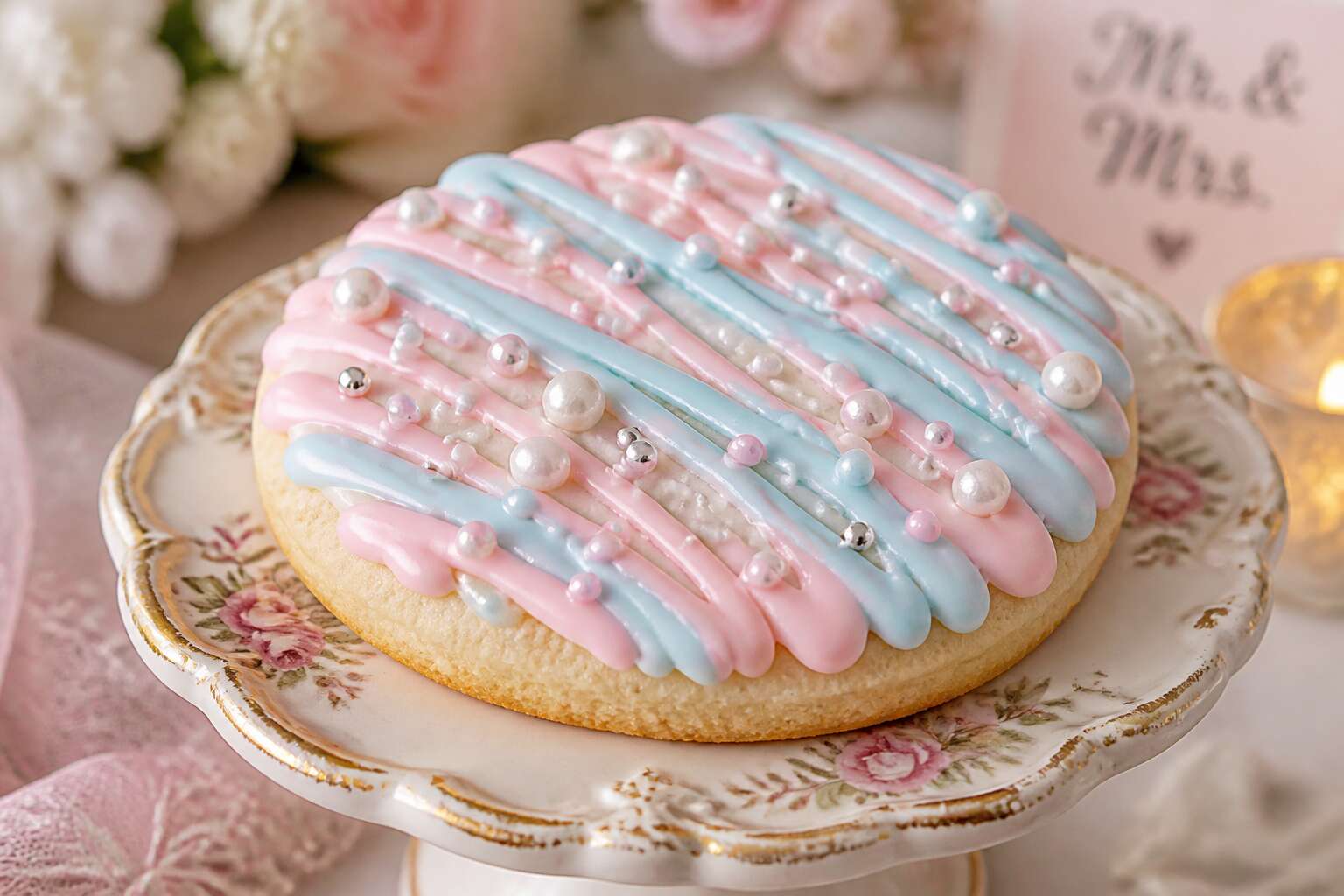
Understanding the Wedding Cookie Craze
The Origin of Bridal-Inspired Confections
The wedding cake cookie did not emerge from a pastry chef’s whimsy. Its lineage reaches into the shadowed corners of bridal history, where grain and honey were scattered over a bride’s head to ensure prosperity. That ancient gesture fractured into smaller, portable sweets, each one a charm meant to protect the couple from misfortune. In some regions, these were called bride cakes, and guests carried them home as talismans.
By the 19th century, confectioners shaped these charms into the modern wedding cake cookie. The evolution followed a practical path:
- A need for easy distribution
- A desire for individual portions
- A shift from symbolism to sweetness
Today, South African bakers reinterpret these historic forms with local spices and dried fruits. The cookie retains its original purpose, a tangible wish for a lasting union, even as its ornate surface conceals a far older, more arcane recipe.
Why Almond and Vanilla Flavors Steal the Show
Ask any South African baker for their best-selling wedding cake cookie and the answer lands on two flavors: almond and vanilla. Vanilla offers a clean, familiar base that pairs with any filling. Almond contributes a faintly bitter edge that stops the cookie from tasting too sweet.
The chemistry explains the loyalty. Vanilla’s compounds dissolve in butter, spreading across the whole bite. Almond’s benzaldehyde remains stable under heat. The two extracts create a balanced cookie that needs no garnish.
A successful recipe tests both through the oven heat:
- Vanilla deepens during baking.
- Almond sharpens as the cookie cools.
The wedding cake cookie may lean toward new spices, but almond and vanilla still carry the tradition.
Choosing a Base Recipe for Versatility
The wedding cake cookie has moved beyond the bridal table. South African bakers sell these cookies all year for weddings, christenings, and corporate orders. The appeal is their adaptability. A single base dough becomes an elegant gift or an everyday treat. Understanding this craze requires looking at the dough, not the decoration.
Choose a base recipe that tolerates variation. Butter and sugar ratios matter more than ornamentation. A firm dough holds its shape. A softer dough welcomes fillings. The best recipes allow texture changes without losing structure. I have tested this with my own batches, and the results stay consistent!
- It handles chilling without cracking
- It accepts rolled and dropped shapes
- It keeps flavor after adding nuts or dried fruit
This versatility sustains the cookie’s popularity. The recipe adjusts to the baker’s needs.
Essential Ingredients for That Distinctive Flavor
Flour and Fat Ratios for Tender Bites
In South African bakeries, the quiet equation of flour and fat decides whether a wedding cake cookie melts into tender layers or turns stubbornly brittle. By weight, two parts cake flour to one part unsalted butter creates that signature crumb. Cake flour, with its lower protein content, keeps gluten development gentle, while the butter carries the richness. A pinch of salt sharpens the sweetness, and a single egg yolk binds the dough without weighing it down.
- Unsalted butter, softened but not oily, delivers the cleanest flavour.
- Cake flour, sifted twice, prevents dense pockets in the crumb.
- A spoonful of baking powder adds lift without altering the almond aroma.
Fold the ingredients only until streaks disappear. Overworking the dough makes the texture pasty. Chill the shaped rounds for twenty minutes so the fats firm up, allowing each wedding cake cookie to bake evenly while keeping a delicate, tender centre.
Sweeteners: Sugar Types and Liquid Syrups
How a wedding cake cookie balances its almond aura depends heavily on the sweetener you choose. Granulated sugar provides clean sweetness and helps the edges brown evenly. Caster sugar, ground finer, dissolves quickly into the butter, creating a more uniform crumb without gritty pockets.
Syrups play a different role. A spoonful of liquid glucose, for instance, locks moisture into the dough and softens the final bite. Honey adds floral notes, but its acidity can be assertive, so use it sparingly. For a South African pantry, another option is golden syrup.
- Granulated sugar for structure and browning
- Caster sugar for a velvety crumb
- Liquid glucose or golden syrup for softness
Each sweetener shifts the wedding cake cookie in a subtle way, so weigh your choices carefully.
The Pivotal Role of Almond Extract
Almond extract carries the entire aromatic identity of a wedding cake cookie. One teaspoon can elevate the dough from plain to memorable, but only when you understand its behavior. The compound benzaldehyde delivers that intense, almost cherry-like almond note. Natural extract comes from bitter almonds, while imitation versions rely on synthetic sources. Both work, yet they differ in strength and heat tolerance. I have learned to trust the natural version.
In a South African kitchen, the choice matters. A wedding cake cookie that bakes too long may lose the nuance of a fragile extract. Stir the extract into the butter and sugar mixture rather than the dry flour. This disperses it evenly without overworking the dough.
- Pure almond extract holds its character through low and slow baking
- Almond flour in the dough asks for a lighter hand with the extract
- Sunlight degrades the bottle quickly, so keep it in a pantry
Mix-Ins and Flavor Boosters Like White Chocolate
White chocolate adds an understated layer to a wedding cake cookie. It brings a condensed milk sweetness that lingers without overpowering the almond and vanilla already in the dough. I prefer to cut a block into ragged chunks rather than use uniform chips. The uneven pieces melt at different rates, creating hidden pockets of creaminess.
Consider three habits when choosing white chocolate for a wedding cake cookie:
1. Look for cocoa butter as the first listed ingredient.
2. Skip bars with vegetable fats; they turn waxy on the tongue.
3. Fold the chunks in last, leaving a few exposed for crispy edges.
The contrast works. Crisp edges, soft centres, and occasional molten white chocolate in one bite. That is how a simple confection earns its place at a celebration, especially alongside rooibos or a short black coffee.
Step-by-Step Baking Methods for Perfect Texture
Chilling the Dough for Shape Retention
Baking a wedding cake cookie demands patience. The oven does its part, but the fridge determines the final shape. Chilling the dough for shape retention transforms a sticky mass into a manageable state. For perfect texture, respect the chill. Roll, wrap, and refrigerate for at least two hours. This halts butter from melting prematurely, which keeps your ruffled edges intact. Without this step, cookies flatten and lose their shape.
A reliable sequence works:
- Preheat to 160°C.
- Slice cold dough into even rounds.
- Space them two centimeters apart.
- Bake for twelve minutes, then cool on the tray.
Every action matters. A warm kitchen sabotages your batch. Cold dough bakes slowly, allowing almond and vanilla to mingle without spreading into a mess. The payoff is a crisp shell and a tender center. That is the mark of a proper wedding cake cookie, one worthy of the bridal table.
Rolling and Cutting Techniques for Uniformity
Rolling and cutting a wedding cake cookie dough demands a steady hand and a cool surface. Dust the bench lightly, never heavily. Roll from the centre outward, rotating the dough a quarter turn each pass. This keeps the thickness even. Use a sharp cutter and press straight down without twisting. Twisting seals the edges and prevents the ruffled border from forming.
Baking methods matter. Position the rack in the middle of the oven. I prefer small batches so the temperature recovers quickly. The cookies should turn pale gold at the edges while the centres remain soft. That contrast defines the texture of a proper wedding cake cookie!
Follow this order:
- Roll the dough to six millimetres.
- Cut and place on a lined tray.
- Bake at 160°C for twelve minutes.
Each step builds on the previous one. Cutter size, dough thickness, and bake time work together for that signature crumb.
Controlling Oven Temperature to Prevent Over-Browning
The oven’s behaviour is the final variable in a wedding cake cookie’s texture. Every oven cycles through heating phases, and that fluctuation causes over-browning. I position a thermometer near the centre rack and wait for the temperature to settle before the trays go in.
A pale crumb requires restraint. If the edges colour before the four minute mark, the heat is too aggressive. I lower the dial by five degrees rather than shortening the bake, because a shorter bake leaves the centre doughy. The wedding cake cookie depends on that slow rise.
- Keep the tray on the middle rack to avoid floor heat spikes.
- Rotate the tray once at the six minute mark.
- Use a light coloured baking sheet to reflect radiant heat.
Residual warmth continues cooking the cookies after removal. I transfer them to a cooling rack within two minutes to stop the browning at that pale gold moment!
Achieving a Soft Center Versus a Crisp Edge
Every wedding cake cookie must choose between a soft heart and a crisp edge. The method starts with cold dough from the chill. I press it into a cutter and place it on a hot tray. The heat sears the outside while the middle stays cold. That first minute sets the structure!
Baking proceeds in two phases. The initial three minutes at 180°C give the edge its rigidity. Then I lower the dial to 160°C. This allows the centre to catch up without turning the whole cookie tough.
- Chill the dough until firm enough to crack.
- Set the tray on the middle rack.
- Rotate once after the first phase.
The wedding cake cookie emerges with a fractured rim and a yielding middle. I wait two minutes on the tray, then move each one to the wire rack. That pause lets the edge finish crisping while the core settles into silence!
Cooling and Conditioning for Optimal Crumb
The crumb of a wedding cake cookie reveals its true quality only after the final cooling phase, a stage many bakers rush. Once the cookies leave the tray, the cooling rack determines the final crumb. Air circulates beneath each disc, drawing out surface moisture while the interior holds enough warmth to finish setting. I never stack them during this window, no exceptions. Stacking traps heat and creates a pale, soft underside instead of a clean break.
Conditioning is the step most recipes hide. The wedding cake cookie needs at least a full day sealed in a container, allowing the crumb to redistribute its moisture evenly. Bite into one too soon and the structure collapses into a dense paste.
- First hour: the exterior hardens fully.
- Fourth hour: the crumb softens inward.
- Twenty-fourth hour: peak texture arrives.
Creative Decorating and Presentation Ideas
Royal Icing Techniques for a Classic Finish
Royal icing remains the definitive choice for a classic finish on a wedding cake cookie. Its smooth, matte texture accepts fine piping details that other glazes cannot hold, from latticework to delicate scalloped edges. A stiff consistency works for borders, while a looser flood consistency fills the interior without bleeding.
For presentation, consider these approaches:
- Pipe a single monogram and surround it with tiny dot borders.
- Flood the cookie in ivory, then add a lace pattern in white.
- Use a petal tip to create frilled edges that mimic fabric.
Let the icing dry completely before stacking. A wedding cake cookie with this finish looks elegant on a tiered stand, and the subtle sheen catches soft light in a way that photographs beautifully.
Fondant Accents and Delicate Craft Details
Adorning a wedding cake cookie with fondant transforms it into a miniature heirloom. Fondant’s pliable nature allows for sculpted blossoms, hand painted filigree, and embossed textures that royal icing cannot replicate. Press a lace mould into a thin sheet, then drape it over the cookie’s edge for a fabric like finish. For presentation, arrange these cookies on a mirrored tray with fresh petals scattered between them, catching the light from every angle.
To add delicate craft details, consider these ideas:
- Gild the fondant with edible gold dust applied with a soft brush.
- Cut tiny leaves from tinted paste and vein them with a toothpick.
- Attach pearl beads along the base using a dot of gum glue.
Each element invites close inspection, and the contrast between matte fondant and glossy accents creates depth. The wedding cake cookie becomes a keepsake worth savouring slowly.
Using Sprinkles, Pearls, and Luster Dust
Sprinkles, pearls, and luster dust offer an immediate way to elevate a wedding cake cookie beyond the expected. I find that a light coating of luster dust on a cooled surface creates a subtle sheen, while tiny pearls add structure and charm. These details work best when applied with intention.
- Use fine sprinkles for a confetti effect along the base.
- Place pearl beads in a single line down the centre for symmetry.
- Dust the edges with gold or silver luster powder for a gentle glow.
The wedding cake cookie benefits from restraint. Choose one accent and let it carry the design. This approach keeps the presentation refined, yet it still feels personal and playful for any celebration.
Selecting Color Palettes for Wedding Themes
A colour consultant asked me to name the element that ruins wedding cake cookie designs. I said politics. She meant clashing hues. In South Africa, where proteas bloom in summer, your palette decides if the cookie looks curated or chaotic.
Selecting tones for a wedding theme starts with the venue and the season. A Cape Winelands barn demands earthy terracotta; a Durban beach ceremony calls for aqua and sand. I have seen a cookie look regal in deep burgundy and blush, only because the baker committed to that pair.
- Match the dominant flower in the bride’s bouquet.
- Pull one accent from the bridesmaids’ dresses, no more.
- Use white space as a colour to balance bold shades.
For presentation, place the cookies on a slate board that mirrors the table linens. The wedding cake cookie should nod to the theme, not recite the wedding program.
Adding a Drizzle of White or Pink Chocolate
After settling on a palette, the finish matters as much as the hue. A wedding cake cookie gains an instant upgrade when you drizzle white or pink chocolate across the surface in thin, controlled lines. I have watched bakers turn a plain biscuit into a centrepiece by letting the drizzle catch the light.
The technique is forgiving! Melt the chocolate slowly, then use a piping bag with a tiny nozzle. Work over a cooling rack so the excess drips away cleanly.
For a softer look, dip one corner of each wedding cake cookie into the chocolate and rest it on parchment until set. The contrast between the matte icing and the glossy drizzle creates depth without extra decoration.
You can also vary the drizzle thickness:
- Thick ribbons for a bold statement.
- Fine threads for a delicate lace effect.
Display the cookies on a simple white platter so the chocolate remains the focus. The cookie shape and the chosen colour stand on their own.
Personalizing With Monograms and Edible Toppers
A single monogram can turn a dessert into a keepsake. The wedding cake cookie carries meaning when you pipe initials in royal icing or press a custom edible topper into the surface. These small details invite guests to pause, to notice the care behind each bite.
Edible toppers have evolved beyond simple sugar flowers. Consider wafer paper prints, gold leaf flakes, or dried citrus zest for a South African twist. Each choice alters the texture and the story.
- Wafer paper monograms with a subtle sheen
- Hand-piped initials in a matching palette
- Pressed edible pearls for tactile contrast
The presentation matters equally. Group cookies on a slate board, leaving space between each monogram. Or nestle them into a linen-lined box where the toppers catch the light. The result is an object of quiet intention, a keepsake in its own right.
Storage, Gifting, and Serving Suggestions
Airtight Containers and Layering Methods
A wedding cake cookie rests overnight in an airtight container, layered with baking paper. This protects the icing and preserves the crumb’s resilience.
- An orange peel strip adds a subtle fragrance to the container.
- Uniced cookies stay fresh in the freezer for three months.
For gifting, each piece fits snugly into a small paper cup. On a serving platter, cookies should sit flat, never stacked. One cookie beside coffee becomes a quiet ritual.
Freezing Dough or Baked Cookies for Make-Ahead
A wedding cake cookie can be made eight weeks ahead if you freeze the dough properly. I find that rolled dough wrapped in cling film holds its flavour longer than baked rounds. Baked cookies lose a little snap after thawing, yet remain fine for casual platters. Freeze baked pieces without icing; royal icing cracks on cold surfaces.
For gifting, drop each cookie into a small paper cup. This stops edges from knocking together. Use a rigid box with a single layer, face up, so the design stays intact. Add a sprig of dried lavender for a quiet, personal touch.
Serve at room temperature. One cookie beside a cappuccino becomes a small ceremony.
Use this make-ahead rhythm:
- Mix dough and shape the rounds.
- Freeze dough for up to two months.
- Bake and cool.
- Ice and let the finish set.
That plan lets the wedding cake cookie taste fresh on the day.
Creating Beautiful Gift Boxes and Party Favors
Once the royal icing has set completely, a wedding cake cookie becomes a small treasure that asks only for a quiet corner. Store them in a single layer inside a lined tin, never stacking the decorated faces. A sheet of wax paper between tiers keeps the design untouched.
For gifting, the presentation deserves as much thought as the bake. Nestle each cookie into a glossy paper cup and tuck it into a rigid box with a clear lid. Dried orange slices or a ribbon in the bridal palette turn a simple favour into a keepsake. Guests remember the gesture before they even take a bite.
- Boxes that echo the wedding theme
- Handwritten tags with the couple’s names
- A wax seal for a formal finish
Serve at room temperature, placed beside espresso or a glass of Cape bubbles. A single wedding cake cookie on a small plate holds more sentiment than an elaborate dessert table.

0 Comments